Zhang AI and Computational Social Science Lab
The Zhang ACSS Lab at Stony Brook University studies social and human behavior with computational, statistical, and network methods — natural language processing and computer vision applied to data large enough that reading it by hand is no longer an option. Our current work centers on the relationship between AI and society, alongside long-running interests in mobility, segregation, and polarization in the United States.
What we work on
Three lines of research run in parallel. All three share a method — large-scale digital trace data, read with language and vision models — and a commitment to verifying what those models tell us.
AI and society, in both directions
How AI reshapes social life, and how social life reshapes AI. One strand measures societal impact — chatbots and adolescent mental health, generative AI in election campaigns, the spread of machine-written text. The other asks what agentic AI does to knowledge production itself: if an agent can run a study end to end, what is left for the social scientist to do, and which checks have to stay human?
Community resilience and the geography of daily life
GPS mobility traces joined to administrative and voter records, used to study how communities absorb shocks and how inequality is built into the places people actually move through. Recent work traces activity-space segregation across U.S. metro areas and public response to Hurricane Helene — where segregation is measured not by where people sleep but by where they spend their days.
Video as social data
YouTube at scale, read with large language and vision models. The lab studies how China is framed and argued about online, and how video circulates around polarization, protest, and voting — including the discourse that legitimizes undocumented immigration, and visual framing in global news coverage. Video is still mostly unread by social scientists; the methods to read it are a research problem in their own right.
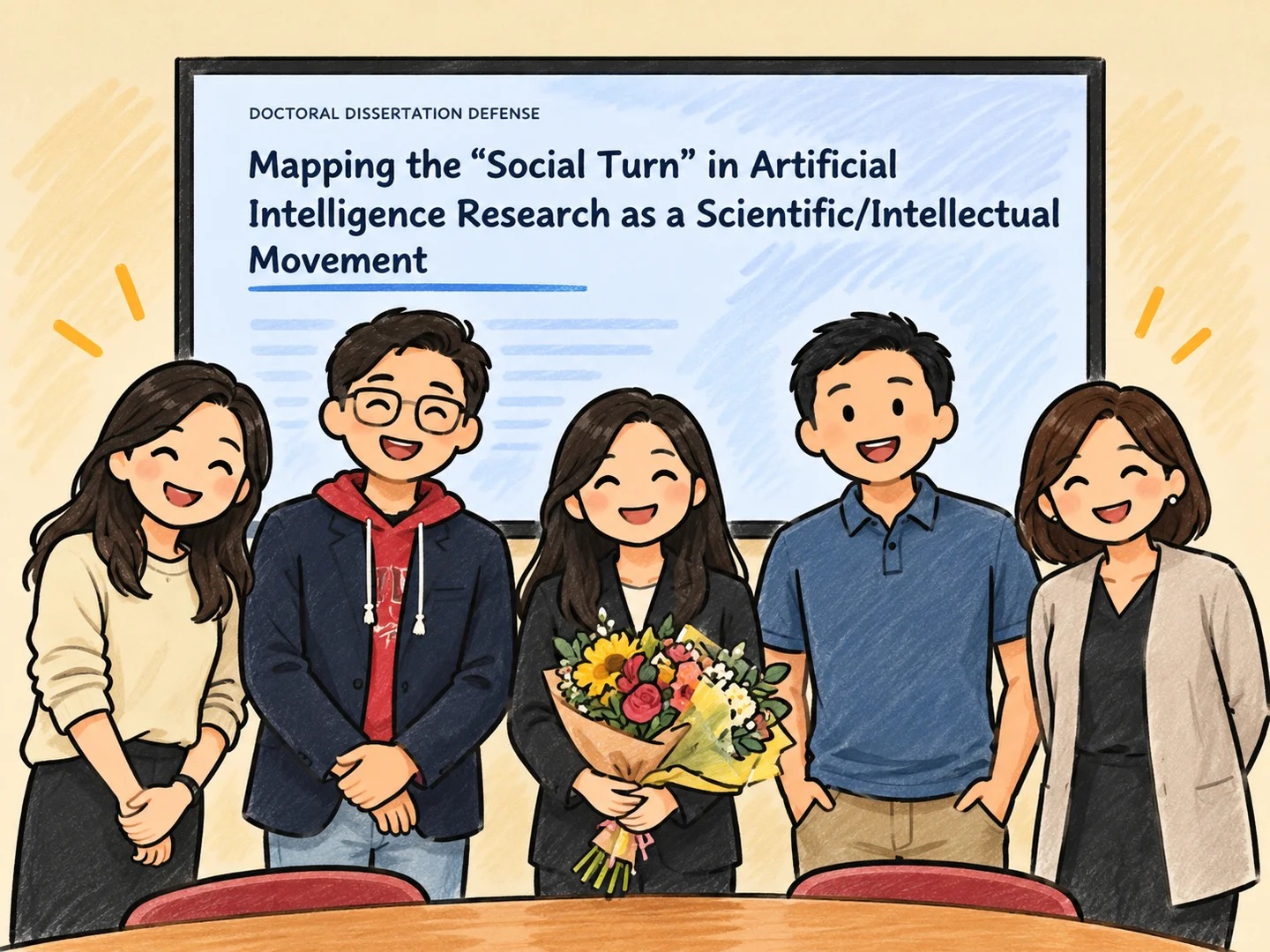
The lab’s first PhD
Placements

Hao Lin
The lab's first PhD graduate. Hao studies racial inequality, social contagion, and social networks, applying computational methods to social behavior; our paper on the risks of using LLMs for text annotation appeared in Social Science Computer Review. BA from Central University of Finance and Economics (2017); MSc in sociology from Utrecht University (2019).

Danial Vahabli
A political sociologist working at the intersection of resistance, culture, and globalization, and a former graduate fellow of Stony Brook's Institute for Advanced Computational Science. His dissertation asks how and why domestic dissidents seek international support, how their concerns get represented in international media, and what that support does to the movements receiving it.
Master’s and RA placements
Pradeep Nalluri
Worked on the lab's Anti-AAPI Hate Speech and Incident Project.
Amarnath Kalluru
Worked on community resilience research in the lab.
Join the lab
The lab hires graduate and undergraduate research assistants in computational social science. If that is you, apply through this form.